
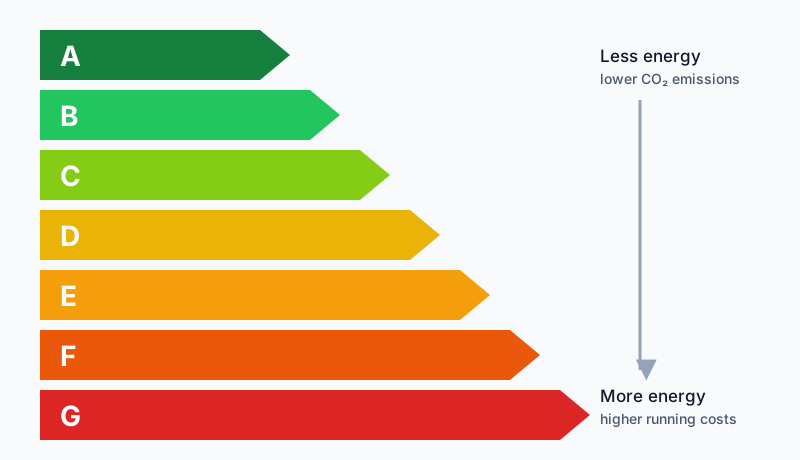
What does the EKB show?
- The building's annual primary energy consumption for heating, cooling, hot water, ventilation and lighting (kWh/m²·year)
- The energy performance class (A–G) and the greenhouse gas emission class
- Information on the building envelope and mechanical and electrical installations
- Use of renewable energy and improvement recommendations
When is it required and how long is it valid?
- For new buildings, at the occupancy permit stage,
- When existing buildings are sold or rented,
- Within one year after a renovation that changes the building's annual primary energy demand (renewal).
The EKB is valid for 10 years from its date of issue; at the end of that period it is reissued after a new assessment. Scope and exemptions are set by the Regulation on Energy Performance of Buildings.
Who issues the EKB?
For new buildings, engineers and architects authorised by the Ministry, or authorised firms employing them; for existing buildings, authorised energy efficiency consulting (EVD) companies and EKB experts may issue the certificate. As an EVD company authorised by the Ministry of Energy and Natural Resources, 2save Enerji provides EKB services for existing buildings.
To improve your class
An EKB is not just a “grade”; its data shows where the building loses energy. Together with the certificate we recommend the most worthwhile improvements — insulation, windows, boiler/heat pump, lighting, automation and solar energy — with their cost and payback period. In large buildings this work can be combined with the mandatory building energy audit.
Frequently asked questions
How long is an Energy Performance Certificate valid?
Ten years from its date of issue. If a renovation changes the building's energy demand, the certificate must be renewed within one year.
How is the EKB class determined?
By comparing the annual primary energy consumption calculated with the BEP-TR software against a reference building of the same type in the same climate zone, on a scale from A to G.
Do I need an EKB to sell a home?
Yes; an Energy Performance Certificate is required for the sale and rental of existing buildings. Scope and exemptions are set out in the Regulation on Energy Performance of Buildings.